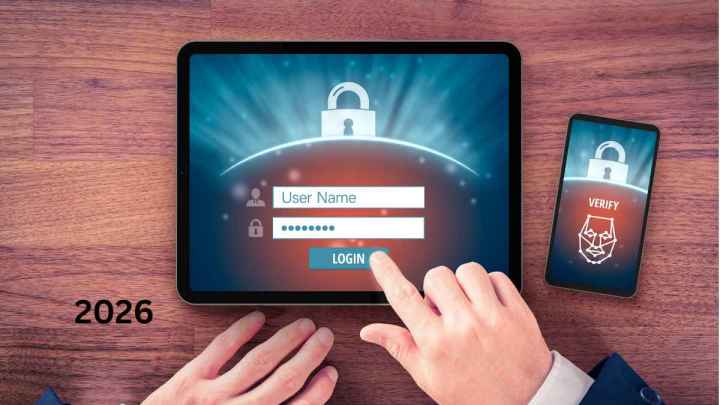
Small businesses often assume zero trust security is only for banks, governments, or global companies with large IT departments. In practice, the underlying principles can be useful at almost any size. A company with twenty employees may still rely on cloud apps, remote workers, contractors, personal devices, customer data, administrator accounts, and outside vendors.
Zero trust begins with a simple idea: network location should not automatically decide whether a person or device can be trusted. Access should be based on identity, device condition, permissions, context, and the sensitivity of the requested resource.
What is zero trust security?
Zero trust is a security architecture built around explicit verification and least-privilege access. Instead of assuming that everything inside an office network is safe, the organization evaluates each access request and limits what a user, device, or service can reach.
This approach matters because modern business systems rarely live in one building. Email may be in Microsoft 365 or Google Workspace, files may be in cloud storage, customer information may be in a SaaS platform, and employees may work from home or while traveling.
Zero trust is not a single product
A common mistake is searching for a “zero trust tool” and expecting one purchase to solve the problem. Identity providers, endpoint security, device management, firewalls, access gateways, monitoring systems, and network segmentation can all support zero trust, but the architecture is created by policies and how those controls work together.
For a small company, the most useful first step is often not buying more software. It is understanding who has access to what, how that access is verified, and whether old or excessive permissions still exist.
Five practical pillars of zero trust
1. Identity
Every employee should have an individual account. Shared logins make activity harder to trace and make offboarding risky. Multi-factor authentication should protect critical services, with phishing-resistant methods considered for administrators and other high-risk users.
2. Devices
A valid password should not automatically make an unknown device trustworthy. Businesses should know which laptops and phones are allowed to reach sensitive systems. Devices should receive security updates, use screen locks, encrypt local storage where supported, and run appropriate endpoint protection.
3. Least privilege
Users should receive the access required for their jobs and no more. A marketing employee normally does not need administrator access to accounting software. A contractor may need one project folder rather than the entire company drive.
4. Segmentation
Segmentation limits how far an attacker can move after compromising one account or device. In a small office, that may mean separating guest Wi-Fi from business systems, isolating backups, restricting server administration, and avoiding a completely flat network.
5. Visibility
Access decisions become stronger when a business can detect unusual behavior. Sign-in records, administrator logs, endpoint alerts, cloud audit trails, and backup monitoring help identify problems before they become major incidents.
How zero trust changes everyday access
Imagine an employee opening the company’s accounting application. A traditional perimeter model might treat the request as safe because it came from the office network. A zero trust approach asks more questions: Is this the expected employee account? Has MFA been completed? Is the device managed and updated? Does the user actually need accounting access? Is the request coming from an unusual location? Is the account suddenly downloading large amounts of data?
Not every small business needs a sophisticated automated risk engine. The value comes from thinking in these terms and adding controls in proportion to the risk.
A low-cost zero trust roadmap
Phase 1: Inventory people, devices, apps, and data
Create a simple list of employees, contractors, devices, cloud services, critical information, administrator accounts, and vendors. If the company cannot answer “who can access this system?” it is difficult to protect it.
Phase 2: Protect identities
Enable MFA, remove unnecessary shared accounts, separate administrator accounts from everyday accounts, and review recovery methods. Remove accounts belonging to former employees and expired contractors.
Phase 3: Establish device standards
Define minimum requirements for operating-system updates, endpoint protection, disk encryption, screen locks, and supported software. Decide whether unmanaged personal devices can access sensitive information.
Phase 4: Reduce permissions
Review groups, shared folders, SaaS roles, database permissions, and administrator rights. Remove access that has no current business reason. Make temporary permissions genuinely temporary.
Phase 5: Segment critical resources
Place high-value systems behind stronger controls. Separate backups from normal user access. Restrict server administration to dedicated accounts and known management paths.
Phase 6: Monitor and improve
Review sign-in logs, security alerts, admin changes, backup status, and incidents on a recurring schedule. Zero trust is not a one-time project; access needs change as staff, software, and business processes change.
Zero trust for remote and hybrid work
Remote work is one reason zero trust has become practical rather than theoretical. Employees often connect directly to cloud services without passing through a traditional office firewall. Identity, device posture, and application-level access therefore become more important than physical location.
A small business can improve remote-work security by requiring MFA, managing company laptops, limiting local administrator privileges, encrypting devices, and avoiding broad network access when a user only needs one application.
What about vendors and contractors?
Third-party access deserves the same discipline as employee access. Vendor accounts should be named, time-limited when possible, and restricted to systems required for the engagement. A supplier maintaining the website should not automatically receive access to email, finance, backups, or unrelated servers.
When a contract ends, access should end through a documented offboarding process.
Useful zero trust progress metrics
- Percentage of critical accounts protected by MFA.
- Number of shared accounts still in use.
- Number of users with administrator privileges.
- Percentage of managed devices meeting update standards.
- Number of stale accounts removed each quarter.
- Time required to revoke a departing employee’s access.
- Percentage of critical systems with tested backups.
These measurements are more useful than claiming the organization has “achieved zero trust.” The objective is to reduce unnecessary trust and make access decisions more deliberate.
Common zero trust mistakes
The first mistake is trying to redesign everything at once. Small teams usually succeed by protecting their highest-risk identities and systems first. The second is focusing only on technology while ignoring onboarding, offboarding, vendor access, and recurring permission reviews.
A third mistake is making controls so inconvenient that employees create workarounds. Security should reduce risk without making ordinary work unnecessarily difficult. Well-designed identity and device controls can improve both security and usability.
Frequently asked questions
Does zero trust mean trusting nobody?
No. It means trust is not granted permanently because of network location or a previous login. Access is verified according to policy and context.
Do small businesses need microsegmentation?
Not always in an advanced enterprise form. Basic network separation, isolated backups, restricted administrative access, and application-level permissions can deliver much of the practical benefit.
Is a VPN a zero trust solution?
A VPN can be one control, but broad network access after connecting is different from application-specific, least-privilege access. A zero trust strategy evaluates access beyond simply being “on the VPN.”
How long does zero trust implementation take?
There is no single finish date. A small business can improve identity and access controls quickly, then mature device management, segmentation, monitoring, and governance over time.
Sources and further reading